
Caracas, October 21, 2026 (Prensa Ingeomin).– In a world that is moving towards clean energy, digitalization and the technological revolution, strategic minerals have become the new oil of the twenty-first century.
Aware of this global transformation, Venezuela officially recognized four years ago a series of minerals essential for its economic and industrial development.
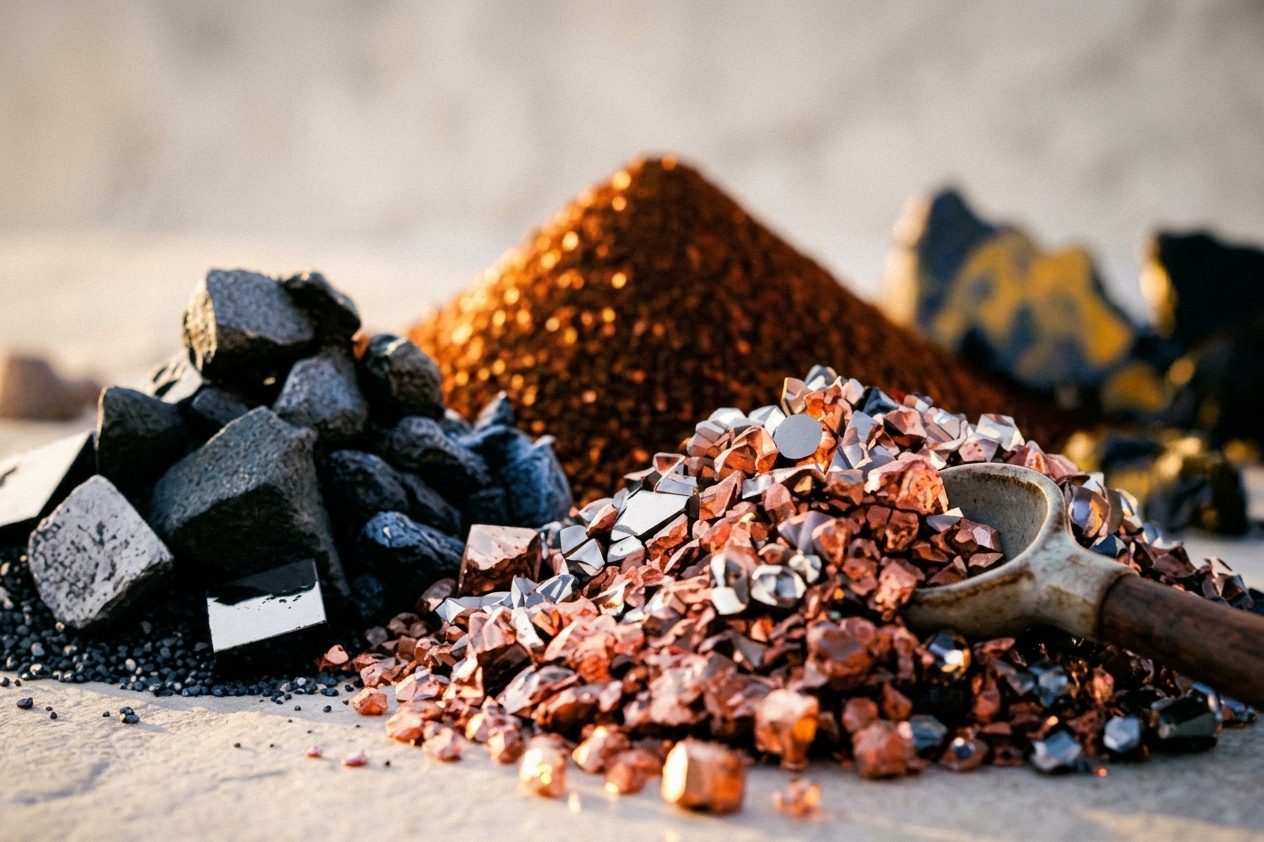
Among them are cassiterite, nickel, rhodium, titanium and minerals associated with rare earth elements. Faced with the growing interest of Western powers to control these resources, the Venezuelan government enacted Decree No. 4598, published in the Official Gazette No. 42,230 of October 8, 2021, which declares them strategic minerals.
This measure reaffirms the country’s sovereignty over its natural wealth and ensures that its exploration, exploitation and commercialization respond to the interests of the people, not to international speculation.
Why are they so in demand?
Cassiterite, the main source of tin, is essential for modern electronics, and without it there would be no soldering together in the circuits of computers, smartphones or satellites.
In Venezuela, its presence has been identified in the north of the state of Bolívar and in Amazonas.
Its use poses the challenge of developing environmentally responsible harvesting methods that protect ecosystems. Nickel, abundant in the Loma de Níquel area, between Aragua and Miranda, sustains one of the most demanded industries of recent decades: the production of stainless steel, turbines, electric motors and batteries of new generation vehicles. Rhodium, a scarce and very high-value metal, belongs to the platinum group, which is essential for automotive catalysts that reduce polluting emissions and is also used in the chemical industry and luxury jewelry.
Its rarity and usefulness make it one of the most coveted metals on the planet. Titanium, known for its lightness and strength, is a metal of the future, used in the aerospace, medical and military industries, as well as in the manufacture of pigments, paints and cosmetics using titanium dioxide (TiO₂).
Among the most coveted of the 21st century are minerals associated with rare earth elements, a group of 17 elements indispensable for the manufacture of high-power magnets, wind turbines, solar panels, electric vehicles, lasers, nuclear reactors and electronic devices. In Venezuela, rare earth reserves are mainly concentrated in the north of the state of Bolívar, within the Orinoco Mining Arc (AMO), a region where the State promotes geological research, responsible exploration and industrialization with sustainability criteria.
The importance of these minerals is not limited to their economic value. Their control today defines the global geopolitical balance, as they are essential inputs for technological and military powers.
Having them means sovereignty and scientific development.
The management of these resources under principles of sustainability and social justice represents a historic opportunity to diversify the economy and build its own production model, based on knowledge, innovation and respect for the environment.